All Categories
Featured
Eco-Friendly Commercial Management Protocols for 2026
Measuring Primary Sustainability Success Indicators
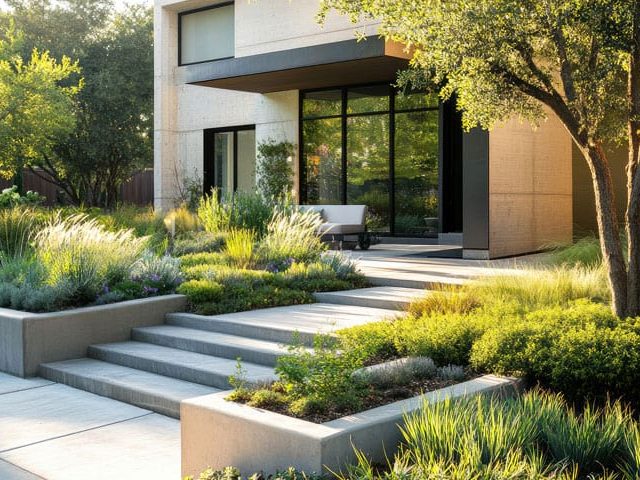

Eco-Friendly Commercial Management Protocols for 2026
Table of Contents
It is a regular site for ongoing student and faculty driven repair tasks. Check out the Sage Hill site for the most approximately date info. UCLA students, personnel, and faculty have actually partnered with The Bay Structure and countless volunteers to assist bring back the ecosystem of the only natural creek on campus.
The as soon as magnificent Stone Canyon Creek was previously a dominant function of the UCLA school. But throughout the years, as the school expanded, the creek was routed underground and now only this small segment runs behind the Anderson School of Management. Volunteers continue to remove invasive plant life, replant the area with native vegetation, and restore the environment.
You can find out more about Stone Canyon Creek Restoration on this page. On the south of campus, the Mildred E. Mathias Arboretum (MEMBG) is a living museum, having unique collections developed to assist the undergraduate teaching objective at UCLA and to augment the ability for research on campus.

This facility offers its educational content to the campus neighborhood, citizens of Los Angeles, and visitors from all over the world to improve finding out about plants and promote greater appreciation for relevance of plants to society. Not far from the botanical garden, near the Court of Sciences is a location in between Franz Hall and Geology fondly called "Hummingbird Street" or "Hummingbird Canyon.
Adopting Drought-Resistant Greenspace Across Los Angeles
She started feeding hummingbirds from her office and the population grew to a colony of 200 plus birds.
Also in the Santa Monica Mountains, the La Kretz Field Station is a distinct, collaborative project between the UCLA La Kretz Center and the National Park Service. The place is ideal for facilitating students and visitors alike to work on collective conservation jobs in the Santa Monica Mountains and across Southern California.
They supply the scientific research study needed to notify management actions to protect and restore California's vulnerable biodiversity resources., which consists of 4 research stations situated along a 10,000-foot elevational gradient.
Implementing Water-Efficient Landscaping Across Los Angeles
Surrounded by semiarid scrubland and riparian woodland, it provides a base for year-round research study in the area. Approximately 6,000 feet higher and 1.5 hours of driving time away are the log walls of Crooked Creek Station, sited amidst montane forest and sagebrush hills. Nearby grow 2 groves of bristlecone pine that consist of the earliest trees on the planet.
Trending CitiesPhoenix, AZ Landscape DesignTucson, AZ Landscape DesignHuntington Beach, CA Landscape DesignLos Angeles, CA Landscape DesignMill Valley, CA Landscape DesignNapa Valley, CA Landscape DesignOakland, CA Landscape DesignPalo Alto, CA Landscape DesignSacramento, CA Landscape DesignSan Diego, CA Landscape DesignSan Jose, CA Landscape DesignSan Francisco, CA Landscape DesignThousand Oaks, CA Landscape DesignVentura, CA Landscape DesignAurora, CO Landscape DesignDenver, CO Landscape DesignLakewood, CO Landscape DesignBridgeport, CT Landscape DesignGreenwich, CT Landscape DesignNew Canaan, CT Landscape DesignStamford, CT Landscape DesignWashington, DC Landscape DesignMiami, FL Landscape DesignOrlando, FL Landscape DesignPalm Beach, FL Landscape DesignTampa, FL Landscape DesignWinter Park, FL Landscape DesignAtlanta, GA Landscape DesignRoswell, GA Landscape DesignTwin Falls, ID Landscape DesignJoliet, IL Landscape DesignBoston, MA Landscape DesignCambridge, MA Landscape DesignPotomac, MD Landscape DesignPortland, ME Landscape DesignSt.
As part of its commitment to conserving water, Caltech has transformed nearly a quarter of its campus to drought-tolerant landscaping and instituted systems to reclaim condensate from developing air-conditioning systems to refill showing swimming pools. California native plants and other drought-tolerant plants cover 17 percent of school, up from 4 percent in 2012.
How to Scale Maintenance Efficiency At Local Hubs?
Every square foot of turf changed conserves 20 gallons of water per year usually. As a result of these efforts, irrigation represent less than ten percent of Caltech's water usage in a normal year. While these landscaping efforts to minimize watering requirements would usually fix the bulk of a water user's obstacles, Caltech's water difficulties are more intricate.
That matters, considered that the energy plants represent about half of the water used on campus in a typical year.
This site describes how to develop and set up California friendly landscaping, irrigation techniques and devices that will assist you water your landscape more effectively, and ideas on how to quickly and efficiently preserve your garden. Please click Lawn to Garden for examples of gardens which contain design components that are turf rebate eligible.
2004-2025 Jadene Mayla, All Rights Reserved.
Preparing for 2026 ESG Reporting for SoCal
"Sustainable landscapes are responsive to the environment, re-generative, and can actively contribute to the development of healthy communities. - From the American Society of Landscape Architects WE CAN SIGNIFICANTLY DECREASE YOUR LANDSCAPES WATER AND ENERGY USE, WHILE PRODUCING A MORE LUSH, BEAUTIFUL, AND ENVIRONMENTALLY SUSTAINABLE GARDEN SPACE FOR YOU AND YOUR FAMILY TO ENJOY!
We use only the most effective water-saving and lighting innovation in our designs that require just a fraction of the water and energy that older systems utilize. CBL develop environment for regional and migratory bird along with beneficial insect populations. We mostly uses natural fertilizers and mulches in our designs and initiates non-toxic bug control programs for all our tasks.
Commercial Landscaping PomonaIt is our objective to develop exterior areas that are beautiful and lively, that need little water and energy, are healthy and happy areas for our clients to take pleasure in, and that likewise provide functional benefits to our regional environment.
Raptors (e.g. hawks, owls, falcons) are big, charismatic bird species at the top of the food chain. They experienced human-driven population crashes during the 19th and 20th centuries. While a subset of these species has actually recovered in the Los Angeles region, others have not and are intolerant of urbanization and other human activities.
Optimizing Water Efficiency With California Landscape Updates
Nesting areas of raptors are also important signs of ecosystem health in metropolitan areas like the Los Angeles region. Several government agencies, designers and nonprofit companies collect data on urban-nesting raptors around the Los Angeles Basin, but these efforts are not well-coordinated. If this info can be consolidated, it will work to producing management tools like maps and databases that can assist direct regional policy and land-use decisions.

Latest Posts
Eco-Friendly Commercial Management Protocols for 2026

Streamlining Regional Landscape Services Through Regional Hubs

Measuring Primary Sustainability Success Indicators